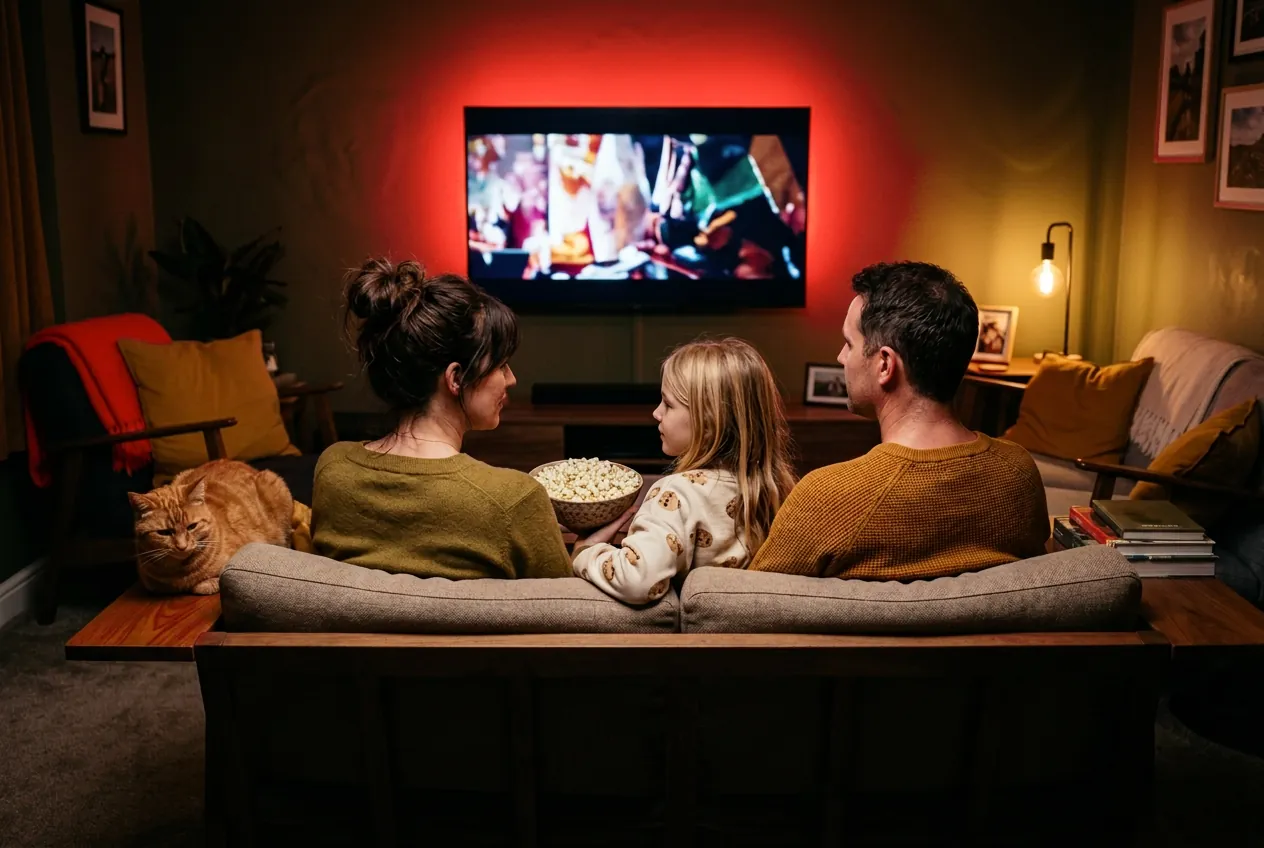
TV didn't die. It moved back to the living-room wall.
Connected TV is the fastest-growing line in our media plans. Here's how we buy it without paying for wallpaper.
 Pieter de WaalMedia director
Connected TV now takes a fifth of the working media we plan for consumer launches. It behaves like television in the room and like digital in the buying platform, and most of the waste lives in the gap between the two.
We buy it on attention-verified inventory, cap frequency by household and cut creative to the length people actually watch.
The room is back
For a decade, video budgets followed people onto their phones. Then the phones went back into pockets and the big screen in the living room came back on, this time connected to the same platforms we buy everything else on. People watch it together, on the sofa, with the sound up. That is the best attention money can buy, and it is easy to waste.

Where the money disappears
Three things go wrong in most connected TV plans we audit.
Wallpaper inventory. Screensavers, menus and autoplay channels nobody chose. They count as impressions and nobody watches them. We only buy placements with verified completion and attention data, and we drop any publisher whose numbers we cannot see.
Household frequency. Platforms cap frequency by device, but a family has four devices and one television. Without a household cap, the same living room sees an ad eleven times in a week. We cap at the household and move the saved budget to new homes.
Television creative on a different screen. A 30-second spot made for broadcast often works. A six-second social cut blown up to a 65-inch screen does not. We cut for the room: longer than social, shorter than broadcast, and built to play with the sound on.
We buy connected TV like television and measure it like digital. Most plans do the opposite.
How we measure it
Connected TV gives us something broadcast never did: a household we can follow, with consent, to a search, a site visit or a store. We run every campaign with a holdout group of matched households who do not see the ads, so the lift we report is lift we caused, not lift that would have happened anyway.
For a recent Hollow Sound campaign, that holdout showed connected TV driving 22% more searches for the H2 headphones than the matched group. That number is why it now has its own line in the plan.
Where to start
If connected TV is new to your plan, start with one market, one flight and a holdout. Ask your agency which publishers you are on, and what share of impressions were watched to the end. If they cannot tell you, that is your first saving.